MechanicalAug 2025
Wind Turbine Vibration Analysis
Completed as part of MMAN2300 coursework
A vibration analysis task simulating a real industry scenario: characterise the lateral vibration of a newly installed wind turbine operating between 5 and 20 rpm, confirm whether resonance sits inside the operating range, and issue a go/no-go recommendation before the site could be cleared for normal operation.
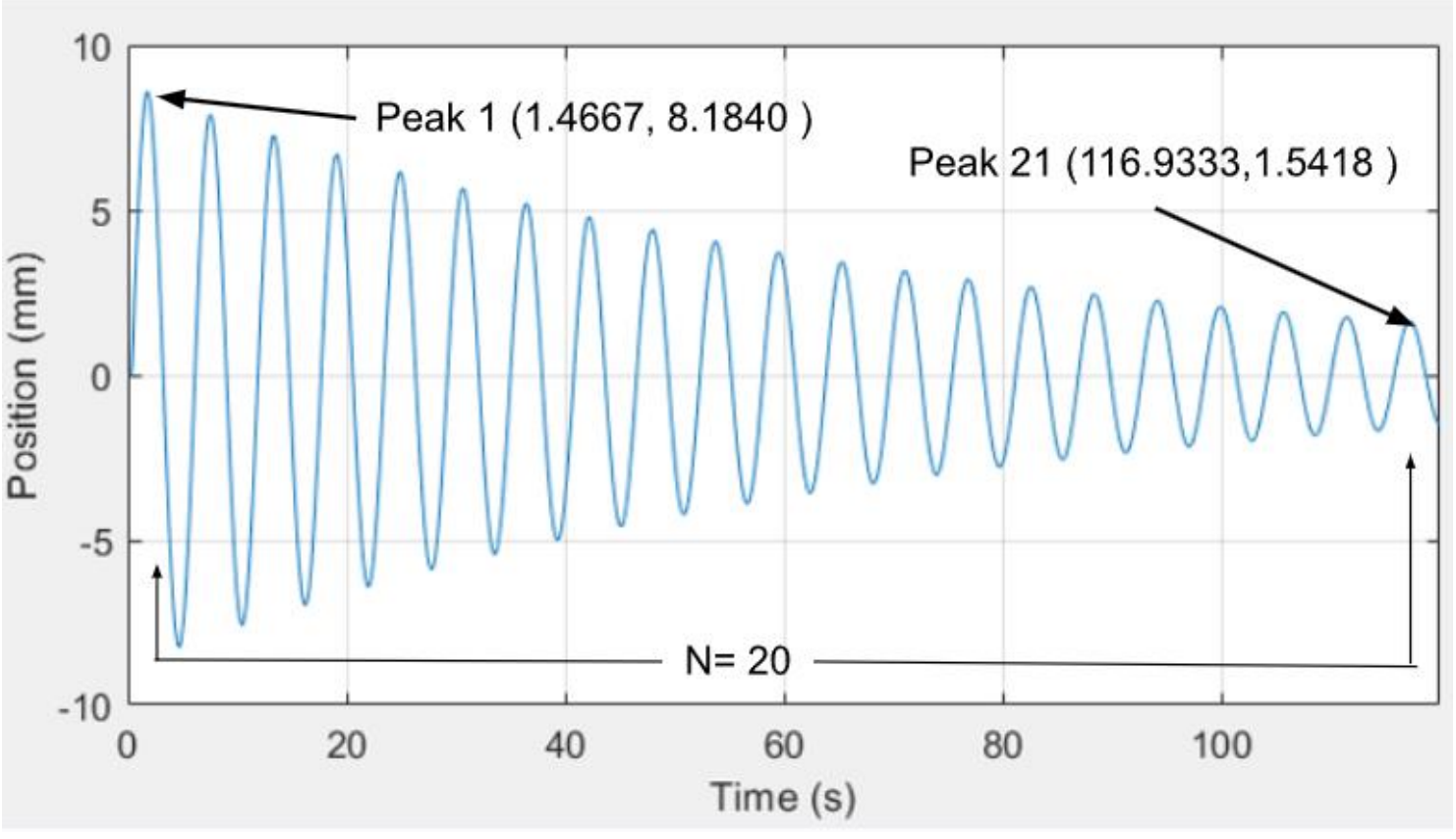
- Applied logarithmic decrement across peaks 1 to 21 (20 cycles) rather than adjacent pairs, since averaging over more cycles reduces noise and timing jitter on the estimate
- Extracted natural frequency of 1.098 rad/s and damping ratio of 1.33%; converted to 10.49 rpm, sitting in the middle of the operating range
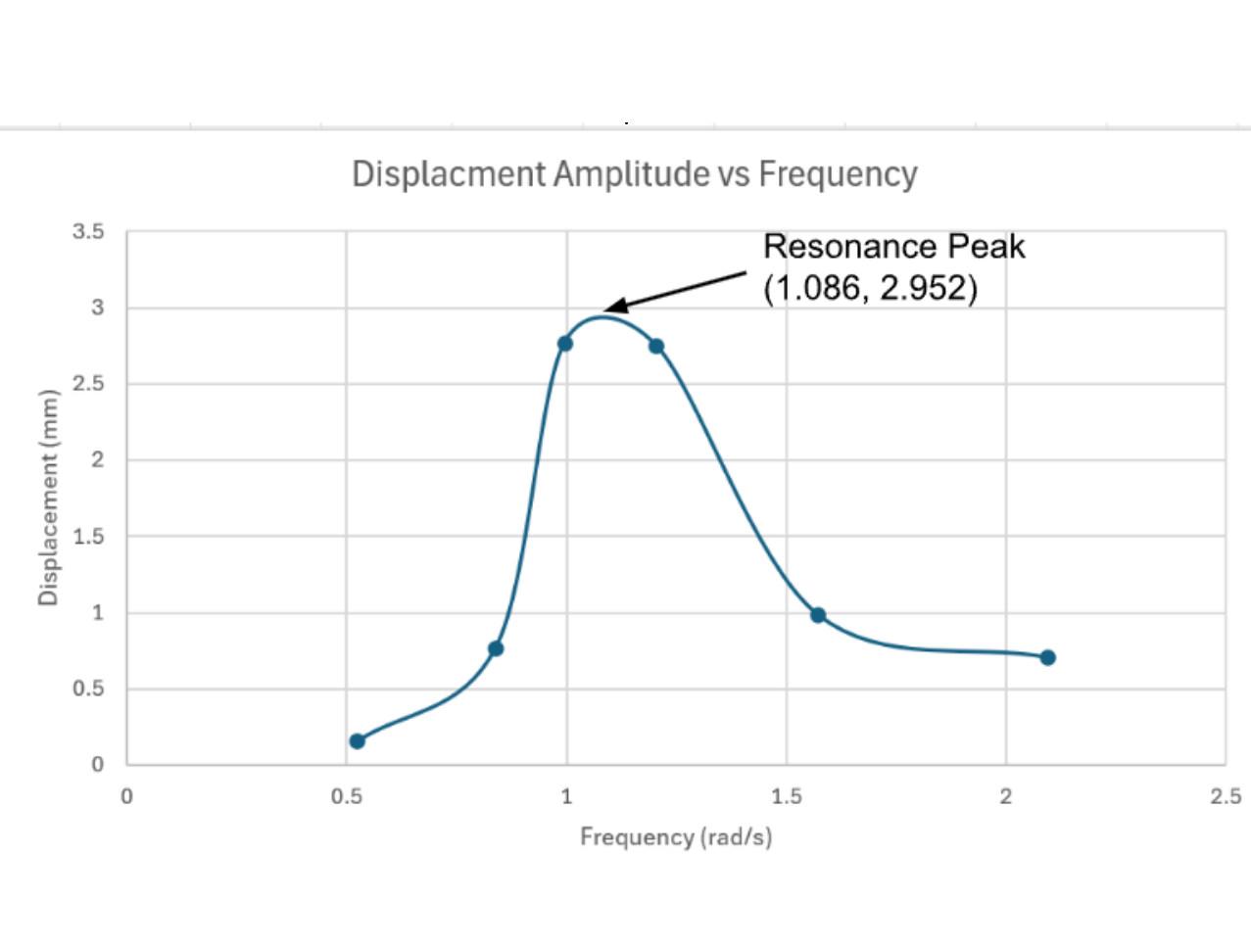
- Ran six steady-state tests at 5, 8, 9.5, 11.5, 15 and 20 rpm; amplitude climbed from 0.16 mm to 2.77 mm near resonance then dropped to 0.71 mm at 20 rpm
- Back-calculated rotor unbalance at 186.51 kgm from 350-tonne system mass; defined forbidden band 9.67 to 11.55 rpm and recommended operating below 9.5 or above 11.7 rpm
Tech Stack
MATLABSDOF System IdentificationLogarithmic DecrementFrequency Response AnalysisRotating Unbalance Modelling
Gallery


Challenges
- Reconciling natural frequency estimates from free-vibration decay (1.098 rad/s) against the resonance peak from forced-vibration sweeps (1.086 rad/s)
- Choosing the right peaks for logarithmic decrement to minimise noise while keeping the estimate stable
- Cross-checking free-vibration and forced-vibration results from two independent tests on the same system
Outcomes
- Natural frequency of 1.098 rad/s and damping ratio of 1.33% extracted from free-vibration decay
- Resonance confirmed at 10.49 rpm with peak amplitude of 2.77 mm, inside the 5 to 20 rpm operating range
- Safe operating bands defined as below 9.5 rpm or above 11.7 rpm, with rotor unbalance quantified at 186.51 kgm