MechanicalRoboticsOct 2025 – Dec 2025
Autonomous Waste-Collecting Catamaran
Mechanical Design Lead - DESN2000 Group Project
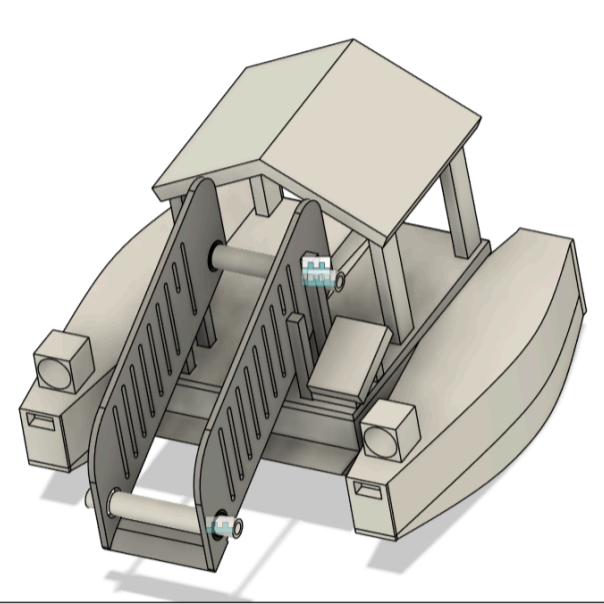
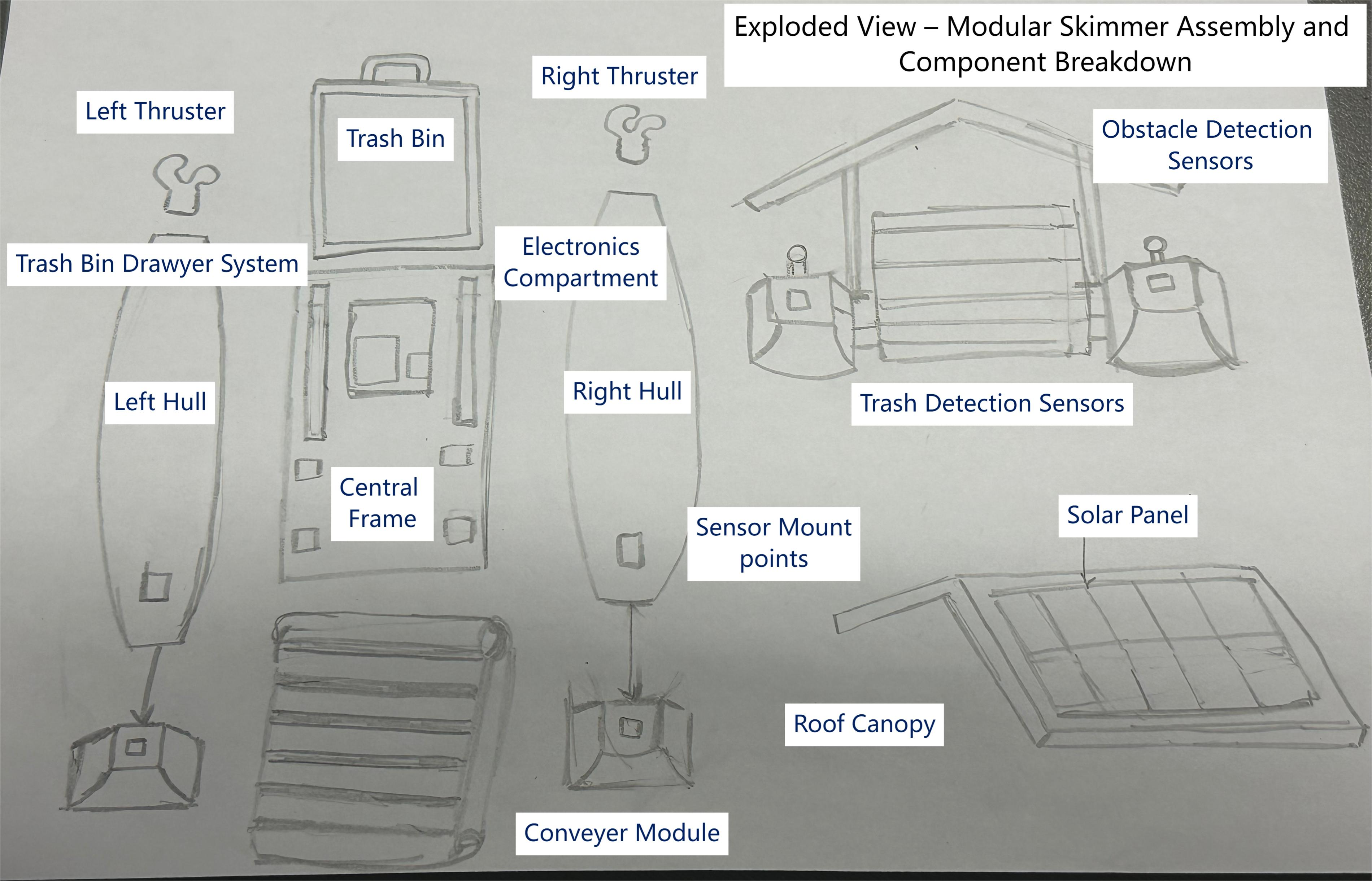
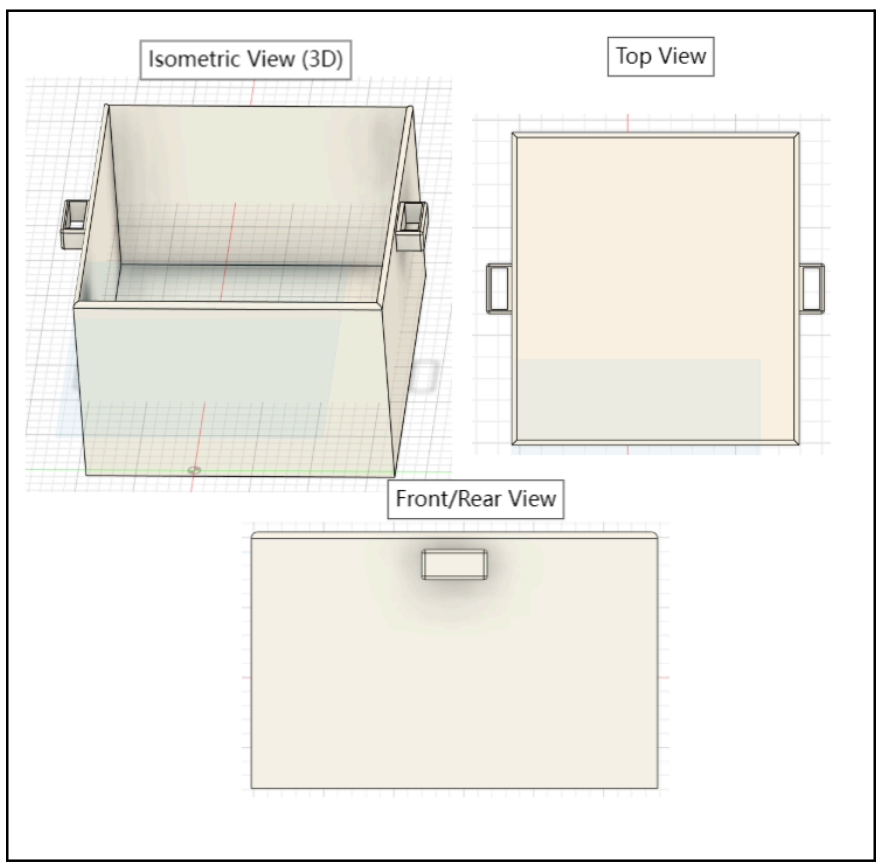
A group engineering design project to build an autonomous robot boat that skims floating debris off water surfaces and deposits it into an onboard collection bin. Around 11 million tonnes of plastic enter waterways each year and most cleanup still relies on manual labour. The design had to stay stable under variable payload as the bin filled, and the conveyor had to reliably scoop debris under wet conditions.
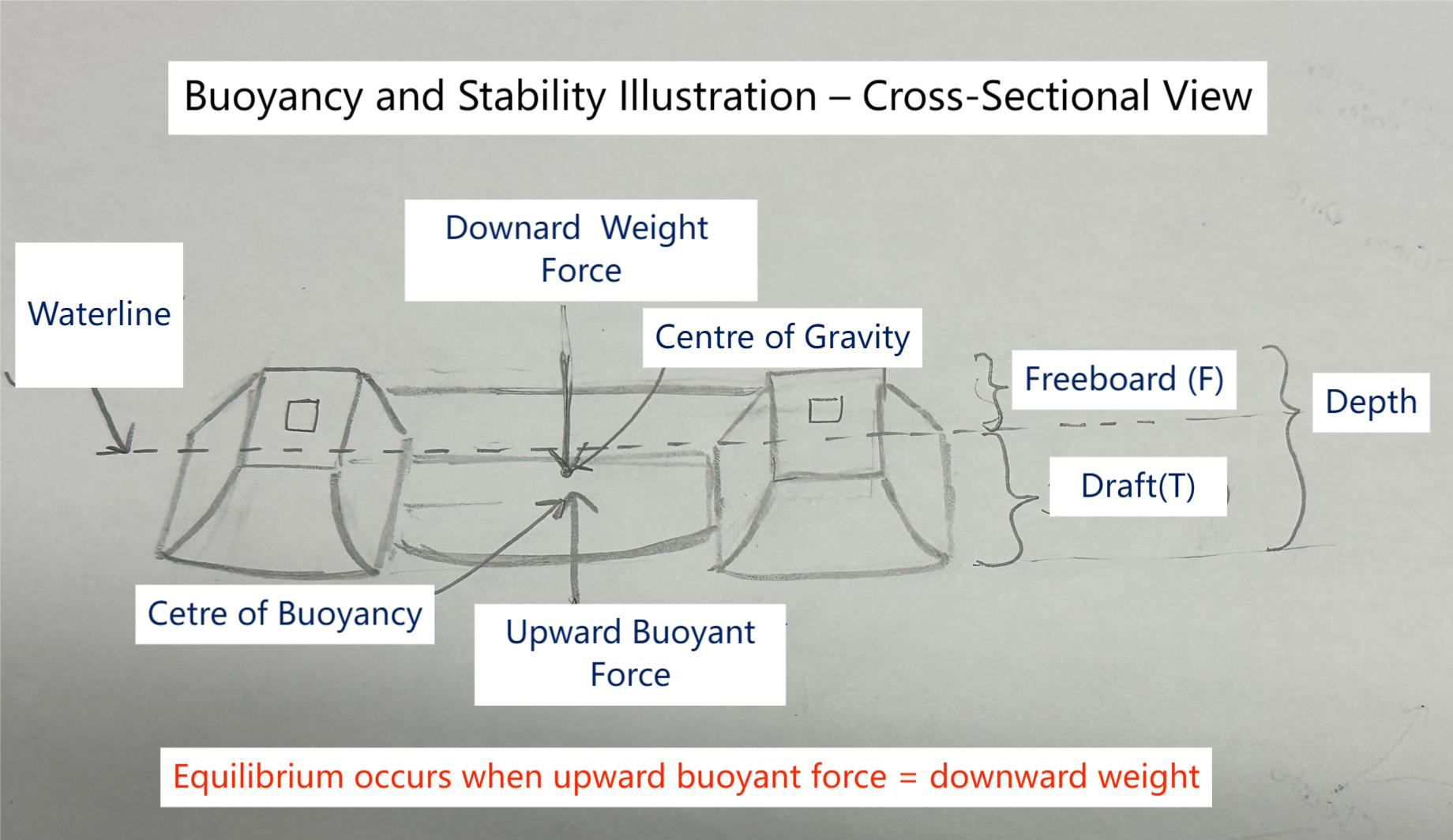
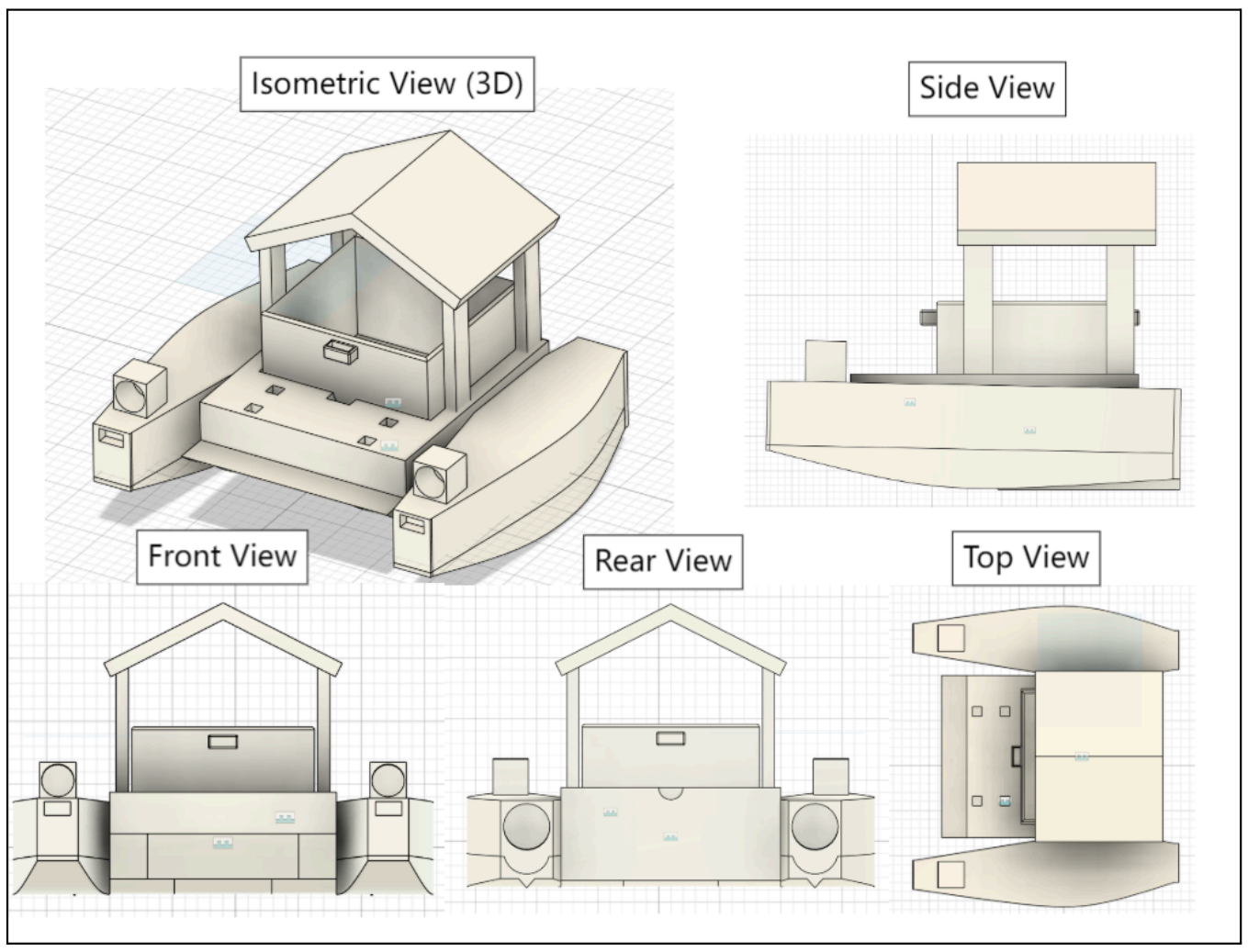
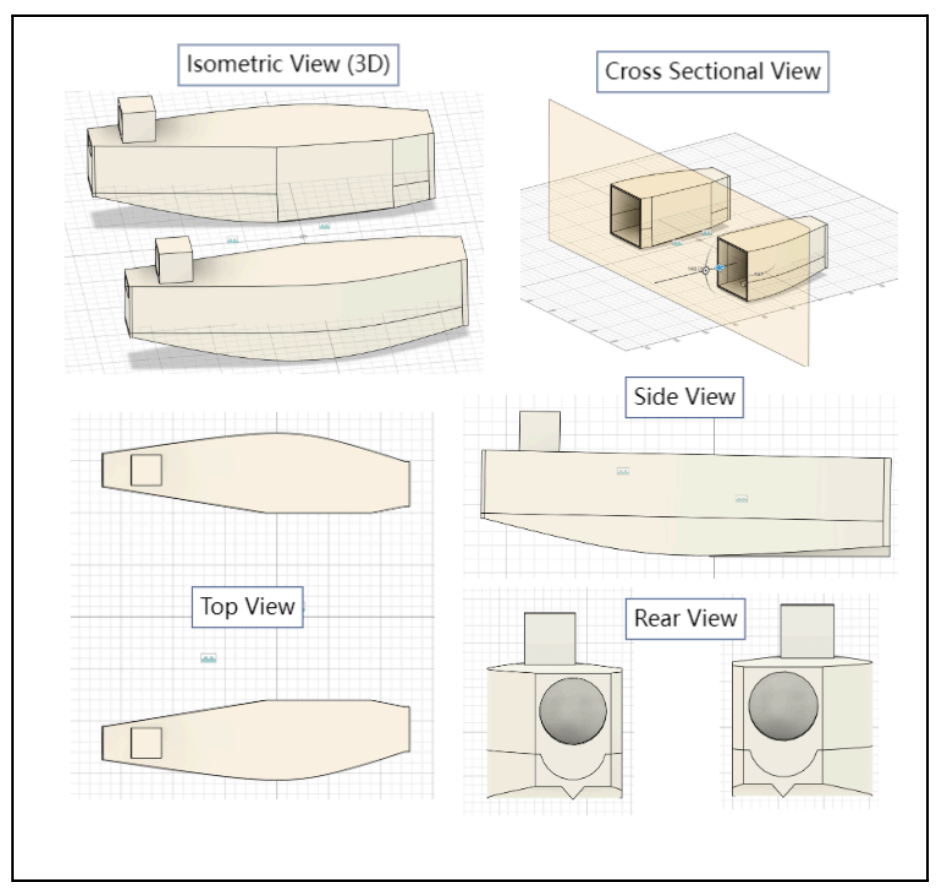
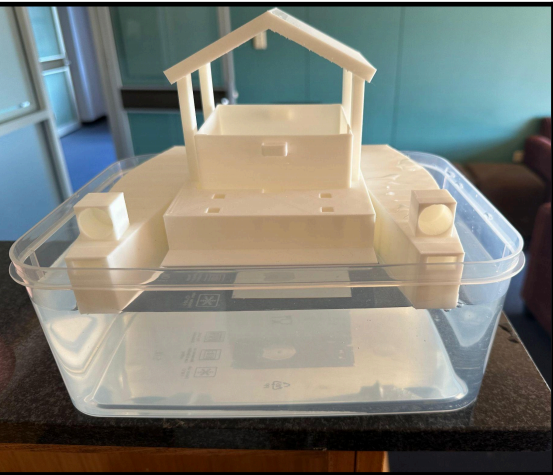
- Owned all hull geometry in Fusion 360, iterating cross-section shape to maintain buoyancy stability as payload shifted during collection
- Ran 10+ incremental buoyancy tests on the 3D-printed prototype, adding 70g at a time and measuring freeboard, matching CAD predictions within 6%
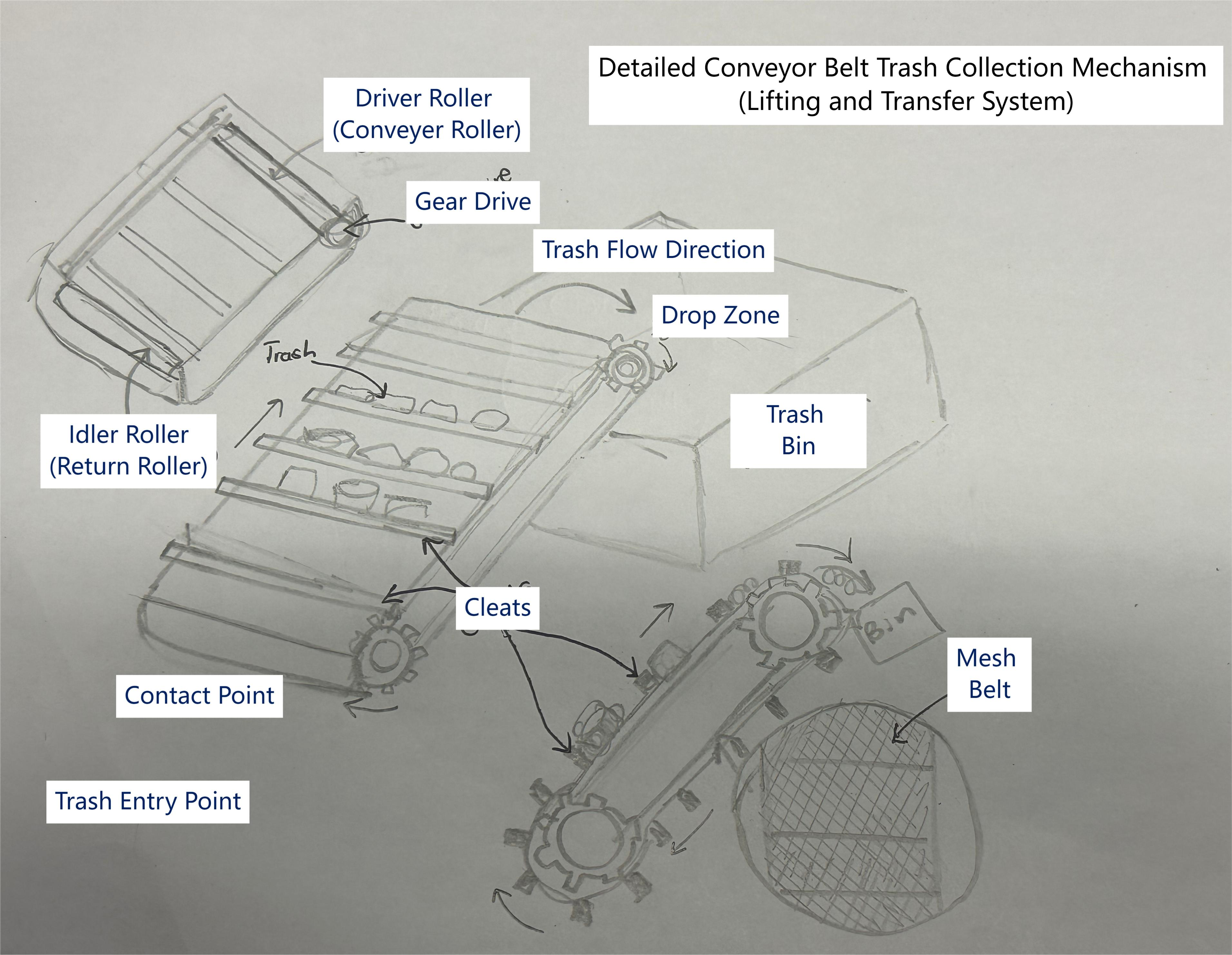
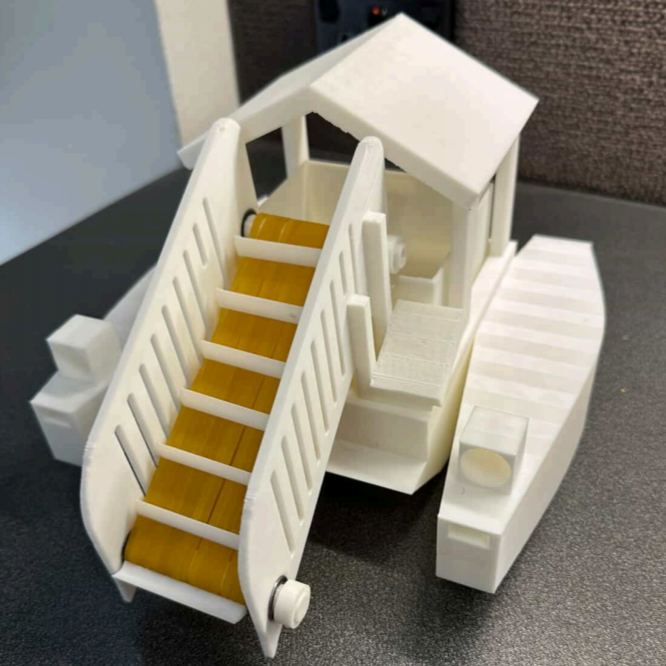
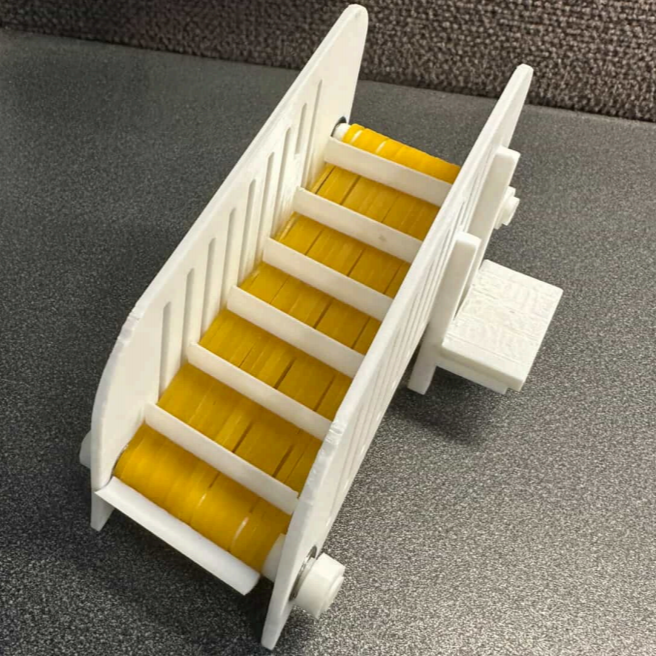
- Diagnosed conveyor intake jamming failure: root cause was cleat geometry and insufficient motor torque under wet load, so rebuilt it from first principles
- Redesigned conveyor increased debris collection by 40%; final prototype supports 4.22 kg, full-scale design extrapolated to 270 kg
Tech Stack
Fusion 360CADHydrodynamicsManufacturingStability Analysis
Gallery

Challenges
- Achieving buoyancy stability across variable payloads with a twin-hull geometry optimised entirely in CAD before physical testing began
- Diagnosing and redesigning a conveyor intake that failed under wet load due to cleat geometry and insufficient motor torque
- Validating CAD predictions against physical test data across ten incremental buoyancy tests
Outcomes
- 40% increase in debris collection efficiency after conveyor redesign
- Buoyancy predictions validated within 6% of CAD model across all test increments
- Final prototype supports 4.22 kg; full-scale design extrapolated to 270 kg with margin