MechanicalApr 2026
Thin Cylinder Pressure Vessel Testing
Completed as part of MMAN3400 coursework
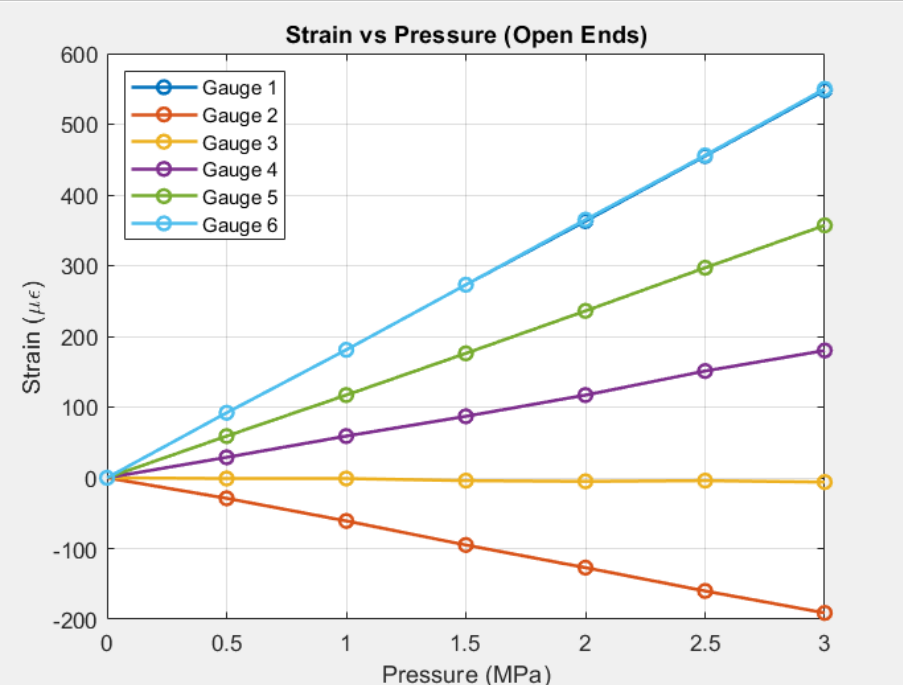
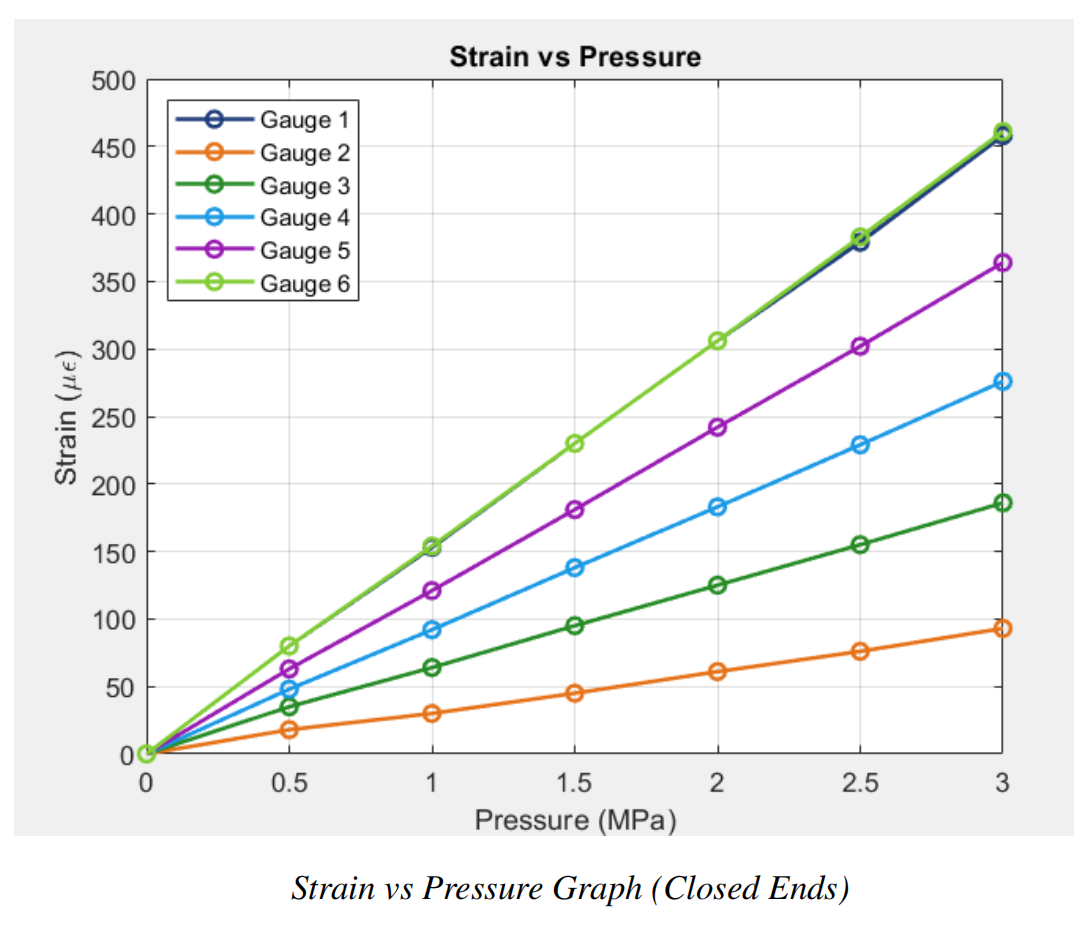
A lab experiment pressurising a thin-walled aluminium cylinder in steps up to 3 MN/m², recording six strain gauges in a rosette configuration at each increment. The goal was to extract material elastic constants directly from experimental data and compare the open-ends and closed-ends stress states to understand their effect on fatigue life.
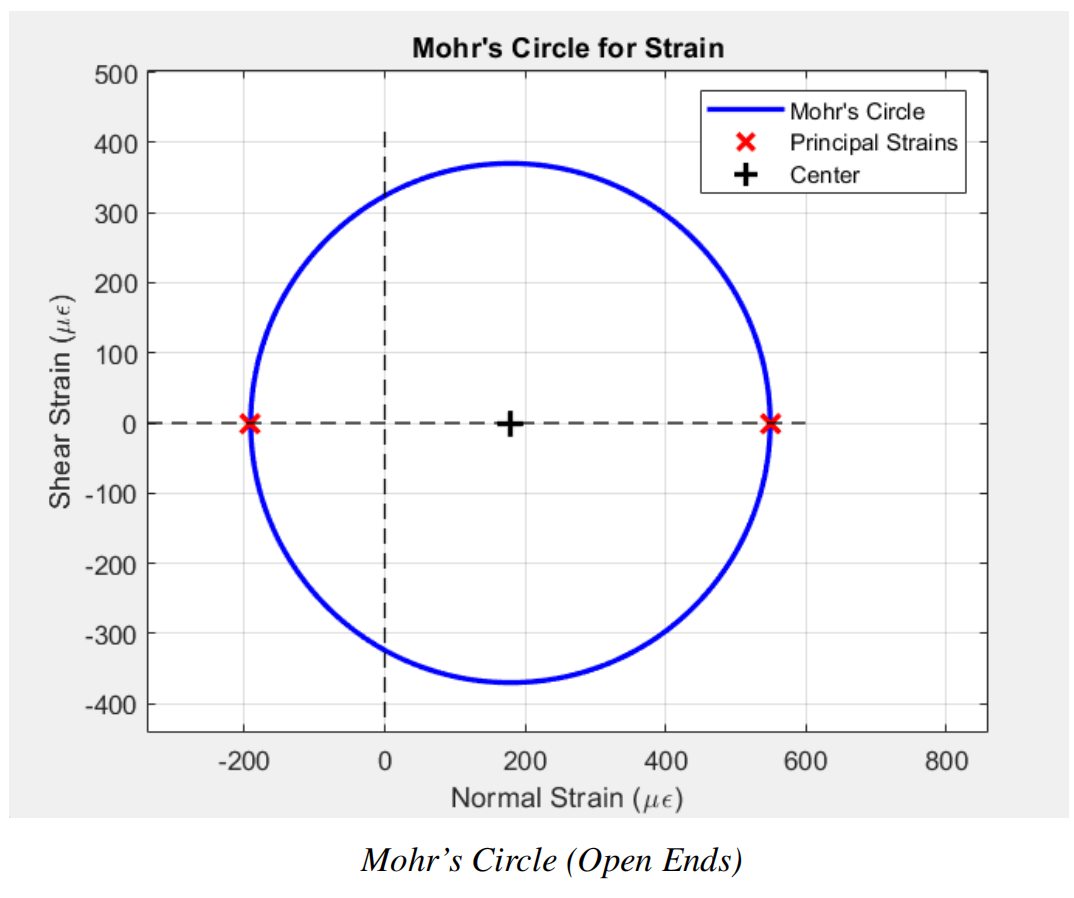
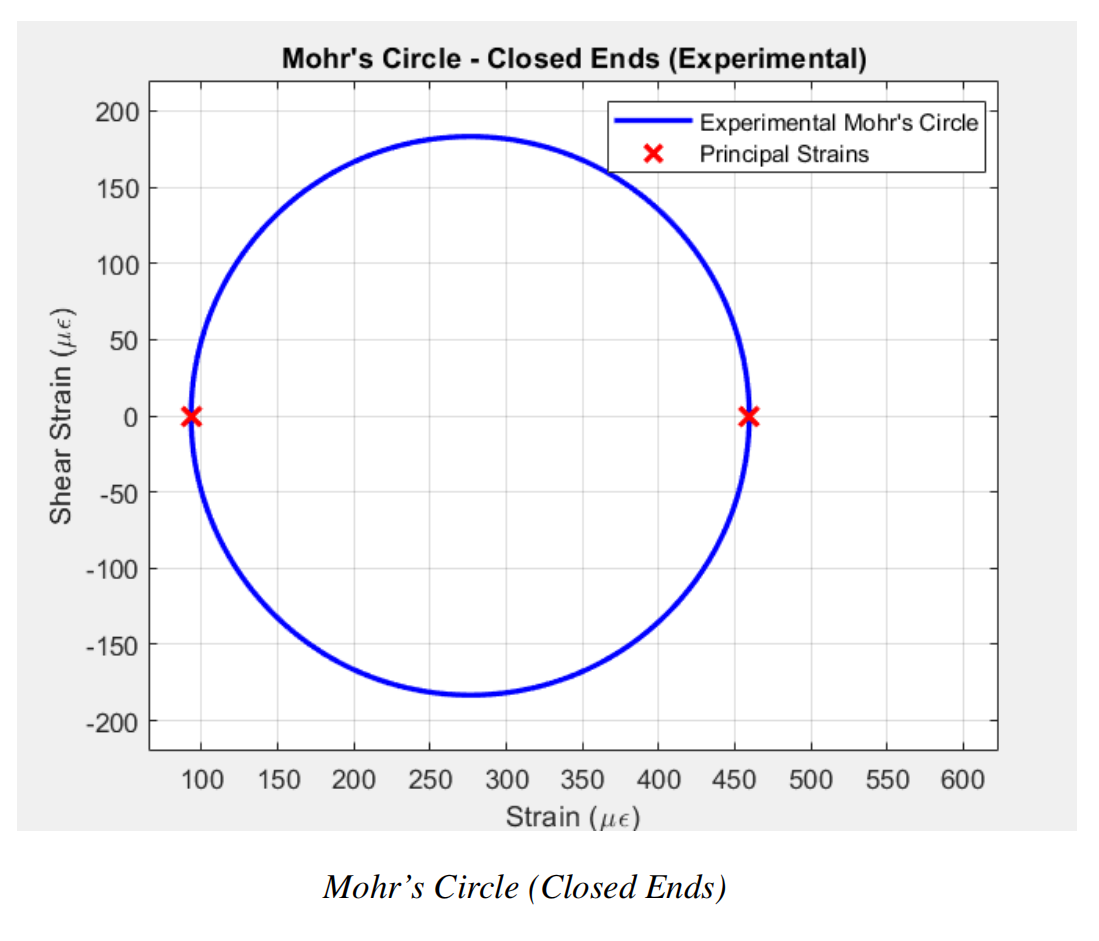
- Constructed Mohr's circle from rosette data to separate hoop and longitudinal principal strain components
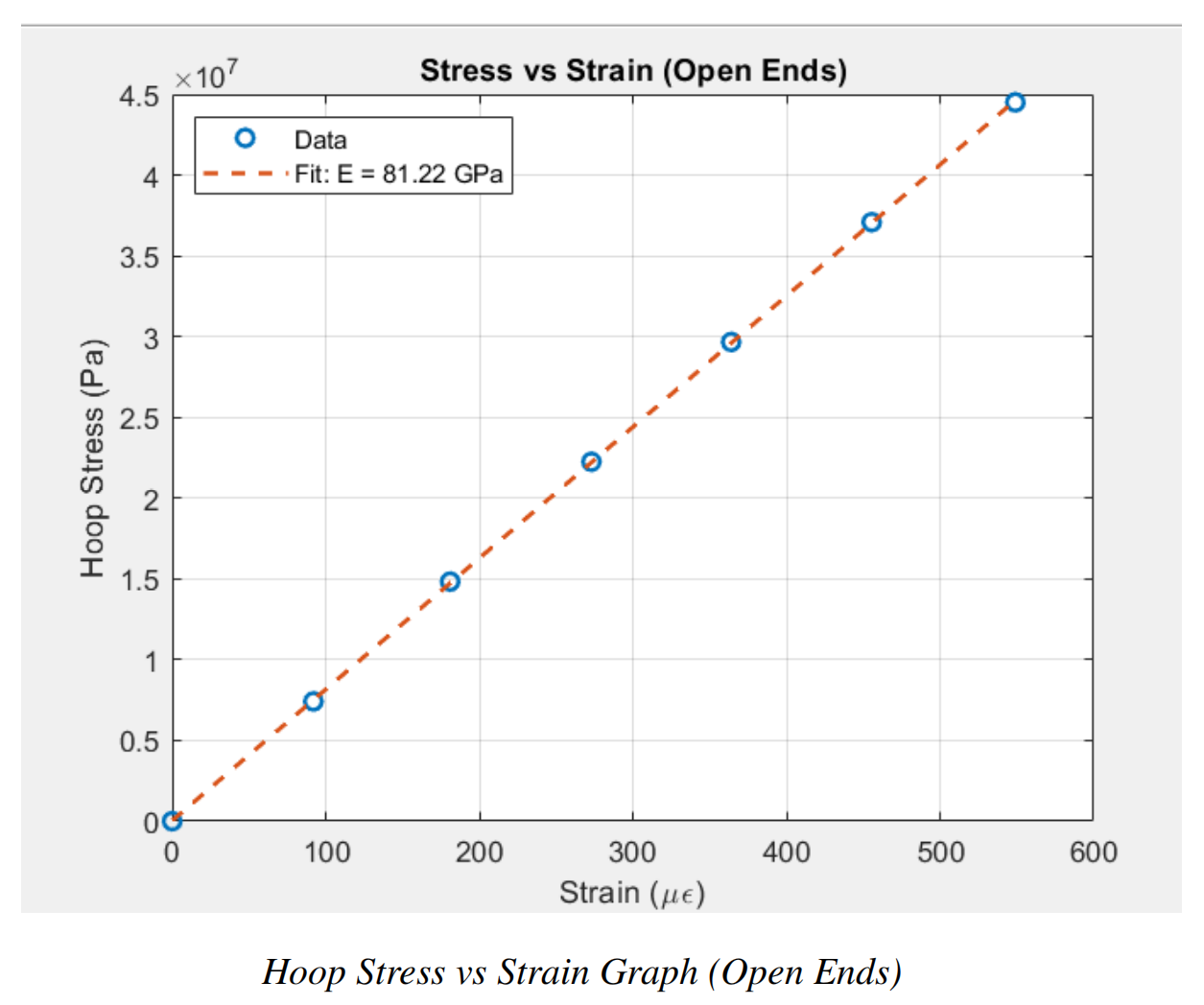
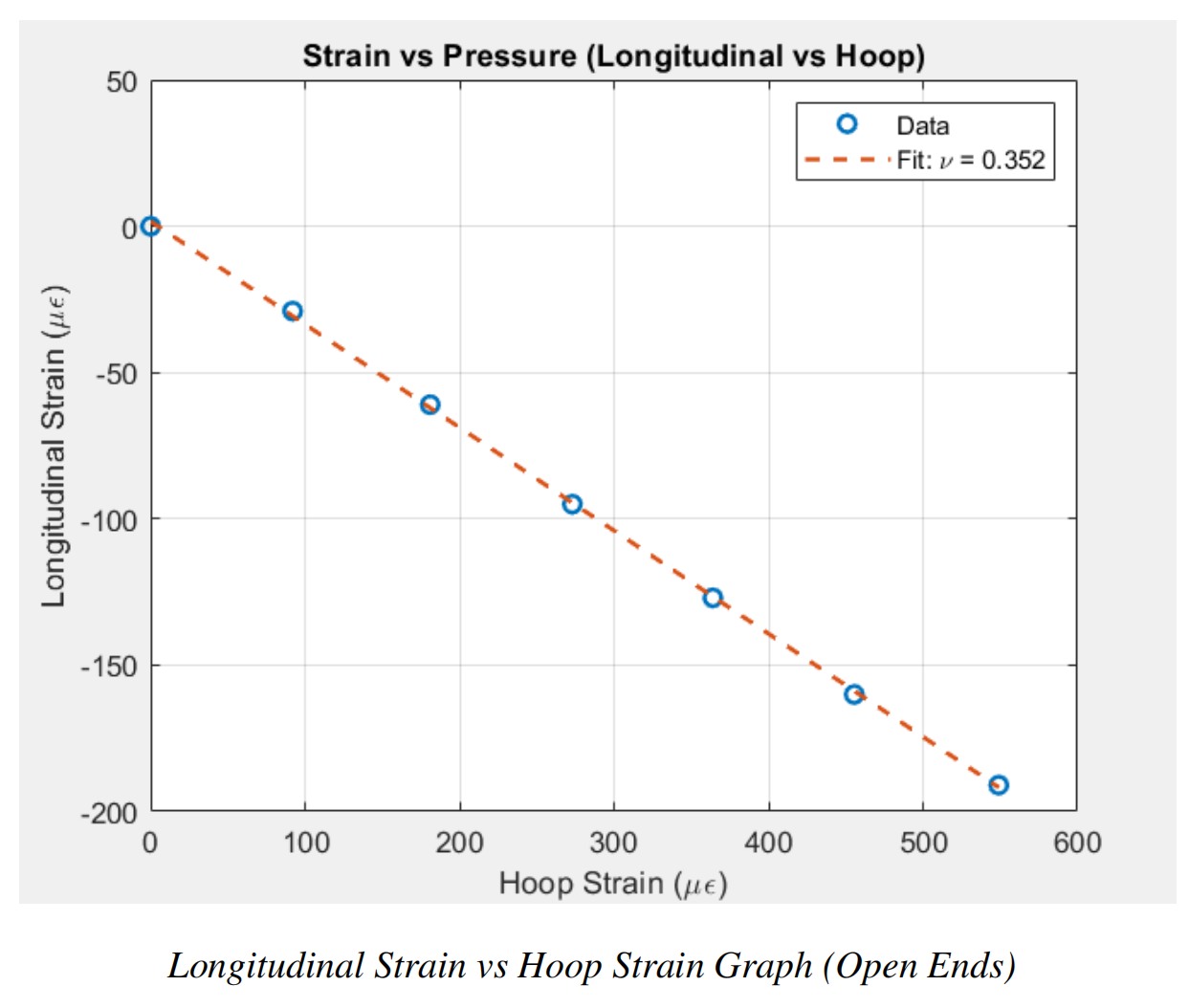
- Fitted elastic modulus at 81.22 GPa and Poisson's ratio at 0.352 from independent regression slopes, with no destructive testing required
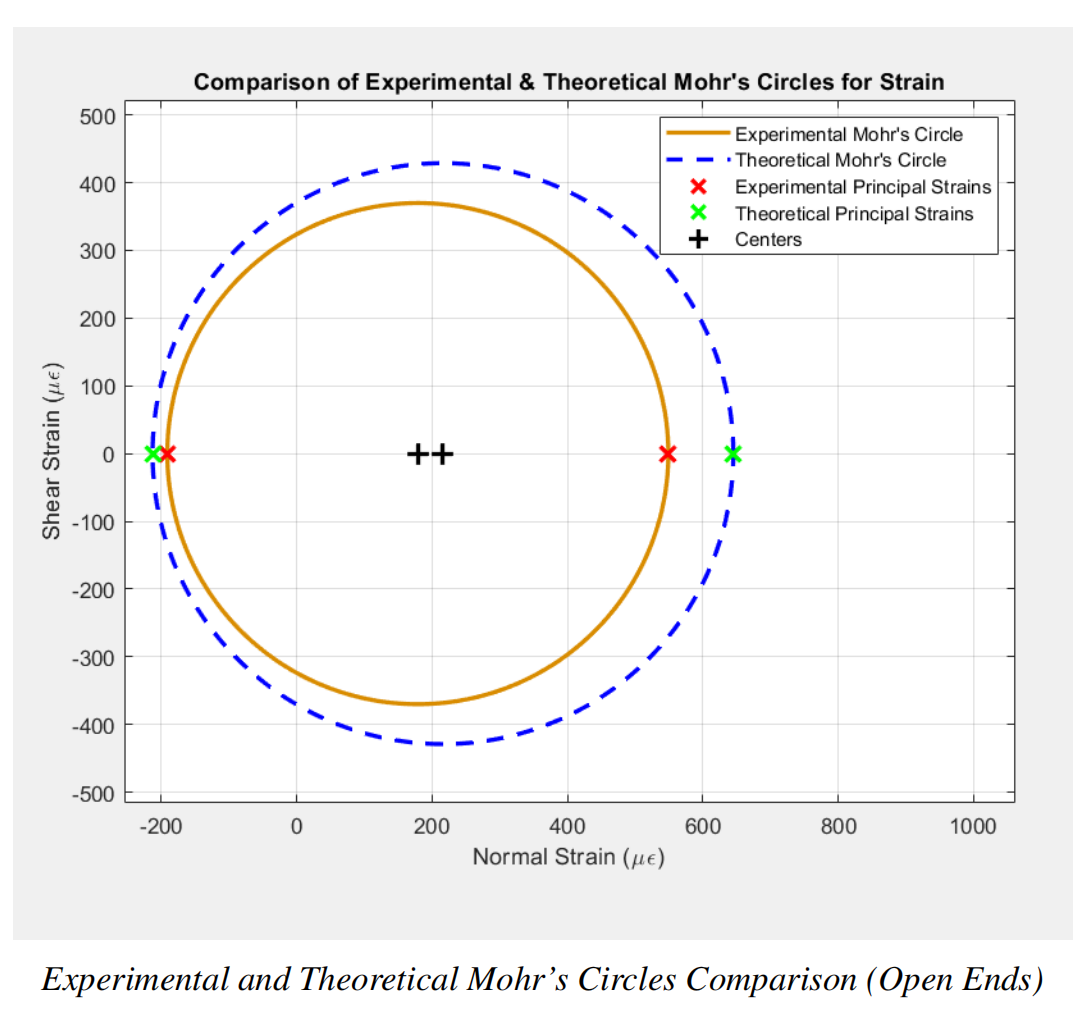
- Open-ends: theoretical max principal strain 645 µε vs experimental 549 µε; traced 15% gap to thin-wall approximation breakdown at wall-to-radius ratio of 0.067
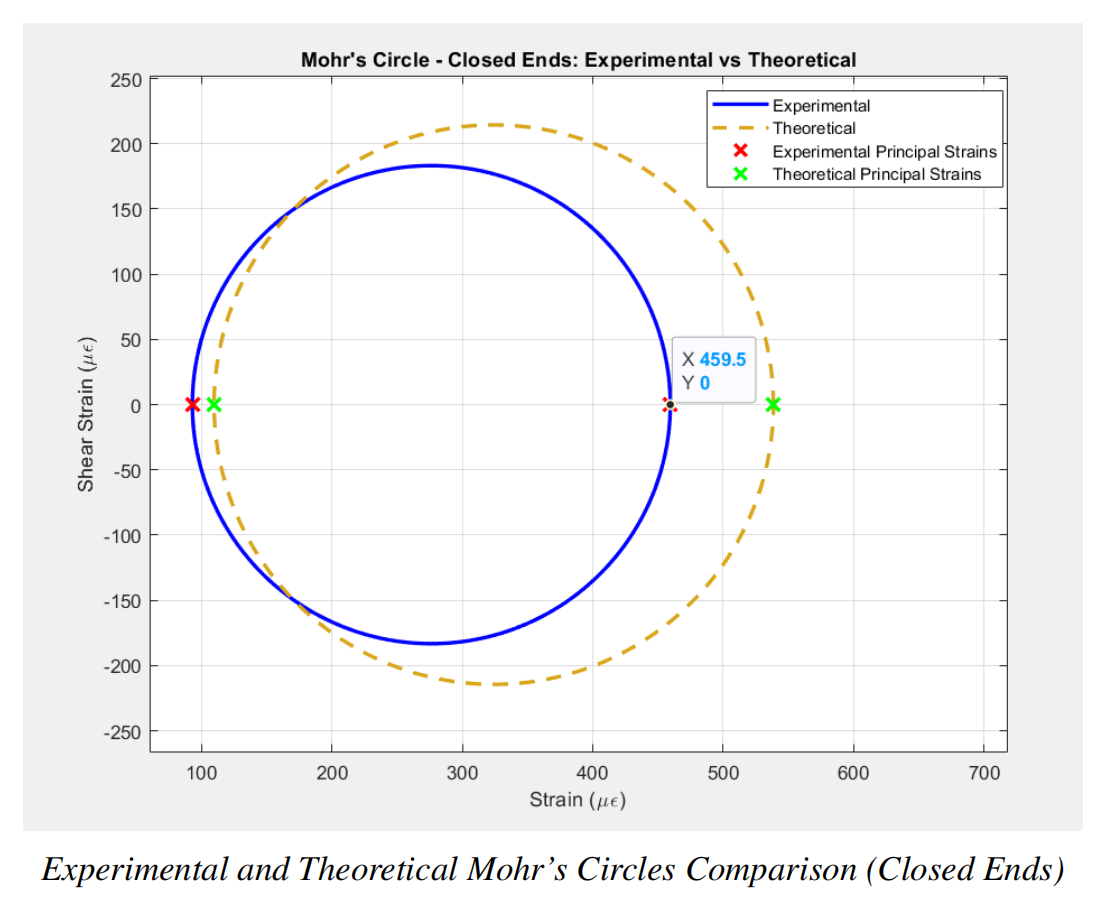
- Closed-ends: Mohr's circle radius dropped from 370 µε to 183 µε, halving maximum shear strain and directly reducing the fatigue damage accumulation rate
Tech Stack
Strain Gauge RosetteMohr's CircleMATLABThin-Wall Pressure Vessel TheoryLinear Regression
Gallery


Challenges
- Extracting independent principal strain components from a six-gauge rosette
- Explaining a 15% gap between experimental and theoretical principal strain
- Separating open-ends and closed-ends boundary condition effects in the axial gauge readings
Outcomes
- Elastic modulus of 81.22 GPa and Poisson's ratio of 0.352 from independent regression fits
- Mohr's circle radius dropped from 370 µε to 183 µε between configurations, confirming 50% reduction in maximum shear strain
- 15% theory-experiment gap identified and attributed to thin-wall approximation breakdown at wall-to-radius ratio of 0.067